Wadi Rum: Inside Jordan's Valley of the Moon
What is Wadi Rum, Jordan's “Valley of the Moon”? Why it's red, the films shot there (Lawrence of Arabia, The Martian, Dune), Bedouin life, and how to visit.
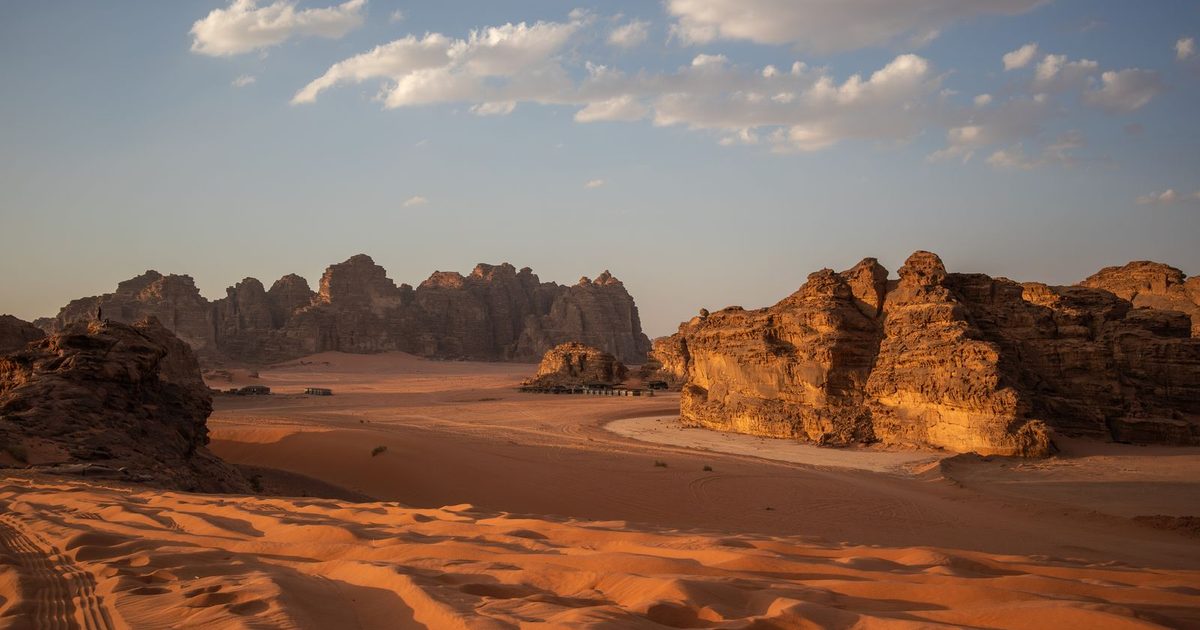
Drop into a valley of blood-red sand ringed by sandstone mountains that rise sheer for a thousand metres, and you'll understand why astronauts, filmmakers and poets keep reaching for the same word: otherworldly. This is Wadi Rum, Jordan's Valley of the Moon, a desert so Mars-like that Hollywood films it as Mars.
So what exactly is Wadi Rum, why is it red, why is it called the Valley of the Moon, and how do you visit? This is the full story of Jordan's great southern desert, its landscape, its Bedouin people, its Lawrence of Arabia history, its starring roles on screen, and how to experience it, plus the Wadi Rum T-Shirt that lets you wear a piece of it.
What is Wadi Rum?
Wadi Rum is a vast protected desert in southern Jordan, about 60 km north-east of Aqaba and 100 km south of Petra. Wadi means “valley” in Arabic, and Rum's valleys run between towering massifs of sandstone and granite that erupt straight out of the sand to heights of 1,700 metres and more. It is the reddest, most dramatic stretch of the Jordanian desert.
The area became the Wadi Rum Protected Area in 1997 and covers roughly 74,000 hectares, nearly the size of New York City. In 2011 it was inscribed as a UNESCO World Heritage Site, one of the rare “mixed” sites recognised for both its natural landscape and its cultural history. National Geographic calls it one of the most awe-inspiring desert environments on Earth.
Geologically, Rum is a story written in stone and water. Over millions of years, rare rains and wind have sculpted the soft sandstone into sheer cliffs, natural arches, mushroom-shaped boulders and slot canyons, while the harder granite forms the dark bases of the mountains. The result is a landscape that feels both ancient and alien, empty plains the size of cities, punctuated by rock the colour of fire.
Why is it called the Valley of the Moon, and why is it red?
The nickname “Valley of the Moon” (Wadi al-Qamar) captures the feeling of the place: wide, silent, lunar-still plains broken by strange wind-carved towers, arches and canyons. Stand in the middle of it at dusk and the scale and quiet really do feel like another world.
The famous red colour comes from iron oxide, rust, staining the sandstone and the fine sand. The hue shifts through the day, deepening to a vivid blood-orange at sunrise and sunset, when low light rakes across the dunes. That combination of red ground and dark cliffs is exactly why the desert reads as “Martian” on camera, and why photographers chase the golden hours here.
The landscape: dunes, rock bridges and canyons
Part of what makes Rum so rewarding is that it's full of named, findable landmarks, not just open sand. A typical tour strings several of them together:
- The Seven Pillars of Wisdom, a vast multi-domed rock face near the entrance, named after T.E. Lawrence's memoir and the first great formation most visitors see.
- Burdah & Umm Fruth Rock Bridges, natural stone arches you can climb, the high Burdah bridge being one of Rum's signature photo spots.
- Khazali Canyon, a narrow fissure cut into the rock, its walls covered in ancient Thamudic and Nabataean inscriptions.
- The red sand dunes, steep slopes of deep-red sand you can climb (and run back down) for sweeping views.
- Lawrence's Spring & Lawrence's House, sites tied to the Arab Revolt, set among palms and ruins.
The Bedouin of Wadi Rum
Wadi Rum is not an empty wilderness. Its only permanent inhabitants are the Bedouin, several thousand semi-nomadic people, many of the Zalabia tribe, who have lived in and around the desert for generations. Today most visitors meet them as guides, drivers and camp hosts, and Bedouin hospitality, sweet tea, cardamom coffee, bread baked in the sand, lamb cooked underground in a zarb, is a core part of the experience.
Staying overnight in a Bedouin camp, under a sky thick with stars and far from any city light, is for many people the highlight of a whole trip to Jordan. The desert's tourism is largely community-run, so visiting directly supports the families who call it home, and a good Bedouin guide, who can read the sand and the light, turns a sightseeing trip into something closer to a friendship.
Lawrence of Arabia and the Arab Revolt
Wadi Rum's modern fame began with T.E. Lawrence, “Lawrence of Arabia.” During the Arab Revolt against the Ottoman Empire in the First World War, Lawrence passed through Rum repeatedly as Arab forces pushed toward the strategic port of Aqaba, and he described the desert vividly in his memoir Seven Pillars of Wisdom.
That history is stitched into the landscape: a huge rock formation near the entrance carries the name of his book, and sites like “Lawrence's House” and Lawrence's Spring are stops on most desert tours. David Lean's 1962 film about him, shot here, then sealed Rum's place in the global imagination.
Wadi Rum on screen: from Mars to a galaxy far, far away
Few places on Earth have stood in for more other places. It began with David Lean's epic Lawrence of Arabia (1962), filmed where the real events happened. Since then, Wadi Rum's red sands and monumental rocks have repeatedly played alien worlds and faraway planets.
Its modern screen credits include The Martian (2015) as the surface of Mars, Rogue One: A Star Wars Story (2016) as the moon of Jedha, Dune (2021) as the planet Arrakis, plus The Rise of Skywalker, Aladdin (2019) and Red Planet. For a huge global audience, Wadi Rum is the look of another planet, even if they've never heard its name. That film industry has also become a real source of income and pride for the local Bedouin community.
Ancient rock art and older history
Long before the cameras, Wadi Rum was a canvas. Its cliffs and boulders hold an estimated 25,000 petroglyphs and inscriptions left over roughly 12,000 years, carvings of people, ibex, camels and hunting scenes, alongside Thamudic and Nabataean script, many concentrated at Khazali Canyon.
The Nabataeans, the same people who built Petra, left a temple here too, near Rum village. Together these traces form one of the longest continuous records of human presence in any desert, and they're a big part of why UNESCO recognised Rum for its cultural value as well as its scenery.
| Fact | Detail |
|---|---|
| Also called | The Valley of the Moon (Wadi al-Qamar) |
| Location | Southern Jordan, ~60 km NE of Aqaba, ~100 km S of Petra |
| Protected | Wadi Rum Protected Area since 1997 (~74,000 hectares) |
| Status | UNESCO World Heritage Site (2011), mixed natural + cultural |
| Why it's red | Iron oxide in the sandstone and sand |
| Highest peak nearby | Jabal Umm ad Dami (~1,854 m), Jordan's highest |
| Inhabitants | Bedouin (largely the Zalabia tribe) |
| Famous films | Lawrence of Arabia, The Martian, Rogue One, Dune |
Things to do in Wadi Rum
Wadi Rum rewards more than a quick drive-through. The classic ways to experience it:
- 4x4 jeep tour, the standard way to cover distance, run by Bedouin drivers to the big sights (dunes, arches, canyons, Lawrence sites).
- Camel trek, the slow, traditional pace, often at sunrise or sunset.
- Scrambling & rock climbing, from easy sand-dune climbs to the Burdah Rock Bridge and serious multi-pitch routes.
- Stargazing, with almost no light pollution, the night sky is staggering; many camps run astronomy sessions.
- Hot-air balloon, a sunrise flight over the massifs is unforgettable.
- Overnight in a desert camp, from simple Bedouin tents to “bubble” domes with skylights over your bed.
Petra and Wadi Rum together
Wadi Rum sits only about 100 km south of Petra, which is why the two are almost always combined into one southern-Jordan itinerary, the carved rose-red city by day, the red desert and a night under the stars to follow. Add the Red Sea resort of Aqaba and you have the classic three-stop loop through the south. If you're planning the pairing, read our companion guide to Petra's Treasury (Al-Khazneh) for the story behind Jordan's other great wonder.
Wear the Valley of the Moon
Explore the Wadi Rum T-Shirt and review its current price, material, available sizes, and images before ordering. Cash on delivery is available inside Jordan.
Whether you've slept under its stars or only seen it on a cinema screen, it's a way to keep a piece of the Valley of the Moon close.
When to visit Wadi Rum
The most comfortable times to visit are spring (March-May) and autumn (September-November), when the days are warm rather than scorching and the nights are cool but pleasant. Summer brings fierce daytime heat, easily over 40°C, though the dry desert air cools quickly after dark. Winter days can be crisp and beautiful, but nights are genuinely cold and the occasional frost or even snow is not unheard of on the high sandstone.
Whatever the season, Wadi Rum's skies are its other great attraction. Far from any city lights, the desert delivers some of the clearest stargazing in the Middle East, with the Milky Way arching overhead on moonless nights. Bring warm layers for the evening even in summer, plenty of water, and sun protection for the day, the open desert offers little shade between the rock formations.
Sleeping under the stars: Bedouin camps
You cannot drive your own car deep into the protected area; instead you enter from the visitor centre near the village of Rum, where local Bedouin guides take you in by 4x4 and run the camps. Spending a night is the heart of the Wadi Rum experience, most visitors say a day trip barely scratches the surface. Accommodation ranges from simple traditional goat-hair tents to comfortable camps and the now-famous transparent “bubble” domes that let you fall asleep beneath the stars.
Evenings in camp usually centre on a zarb, a Bedouin barbecue slow-cooked in a sand oven, shared around a fire with sweet tea, music and stories. It's an experience built on the same hospitality you'll find across Jordan, and waking to sunrise turning the cliffs from violet to fiery orange is something few travellers forget. Booking a camp and a guide in advance is the easiest way to arrange both your stay and your tours.
Frequently Asked Questions
What is Wadi Rum?
Why is Wadi Rum called the Valley of the Moon?
Why is the sand in Wadi Rum red?
What movies were filmed in Wadi Rum?
Where is Wadi Rum located?
Who lives in Wadi Rum?
Can you stay overnight in Wadi Rum?
What is there to do in Wadi Rum?
Is Wadi Rum a UNESCO World Heritage Site?
How is Wadi Rum connected to Lawrence of Arabia?
When is the best time to visit Wadi Rum?
How far is Wadi Rum from Petra?
Is Wadi Rum worth visiting?
Put it on a shirt
 WADI RUMVALLEY OF THE MOON Wadi Rum A ready-made design you can print as it is, or change the words and colours first. Open in the designer