
DTF Printing in Jordan: T-Shirt Printing Methods Compared
How DTF, screen printing, vinyl and sublimation compare for t-shirts in Jordan: what each does best, what it costs, and how to prepare a print-ready file.
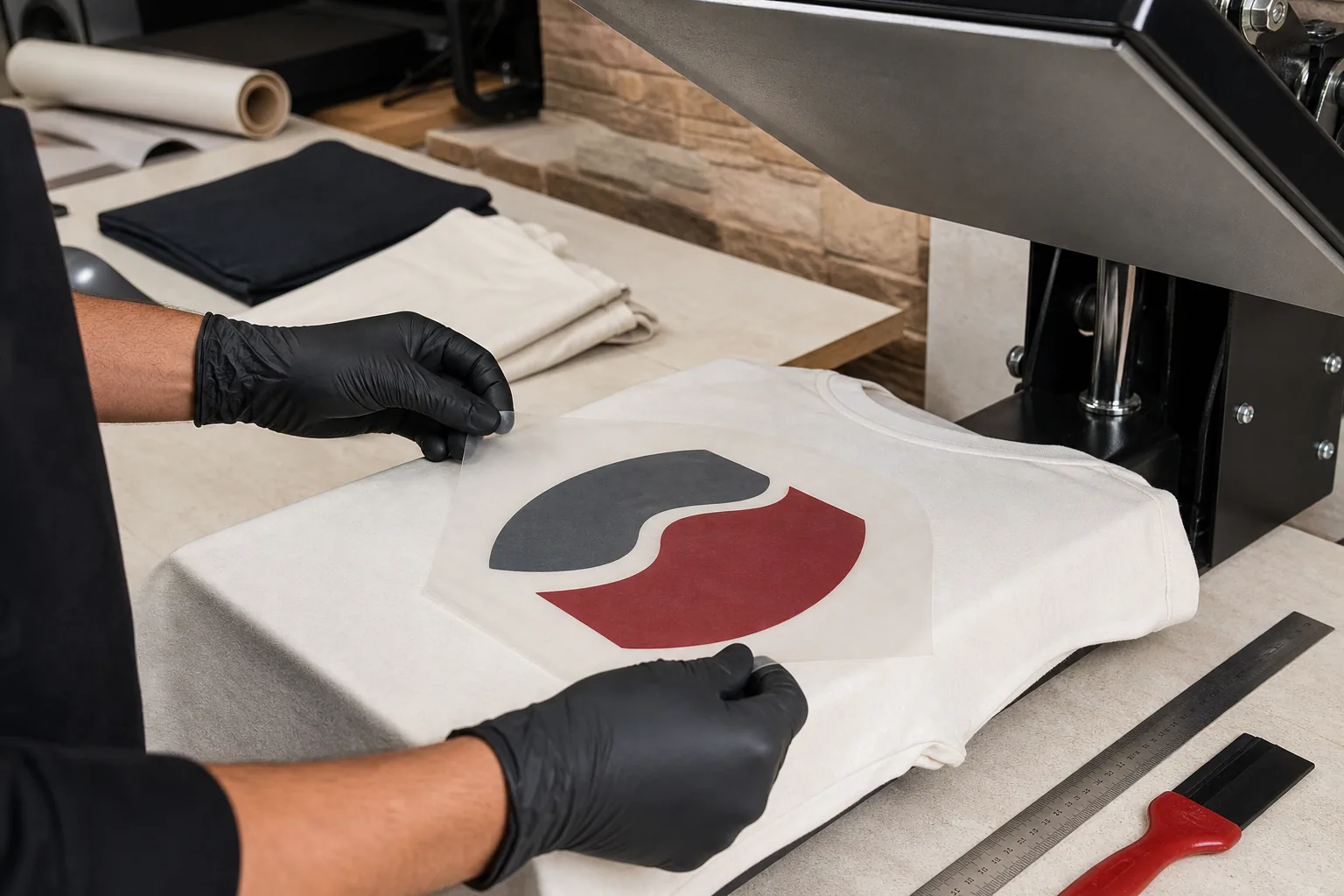
There are four ways a t-shirt normally gets printed in Jordan: DTF, screen printing, vinyl and sublimation. They differ in how the ink reaches the fabric, and that decides what each one is good at, how it feels to wear, and how the price behaves as the quantity changes. Lebseh prints with DTF. This page explains why, and what the alternatives do well, so you can judge which one your order actually needs.
What is DTF printing?
DTF stands for direct to film. Artwork is printed onto transfer film with an adhesive powder, then transferred onto the fabric with heat and pressure before the film is removed. A printed layer remains on the fabric, and its feel varies with the design coverage. Using DTF does not make a print damage-proof or make every source file equally detailed.
Why we chose DTF
- Photos, logos and lettering. Photographs, colours, and Arabic or English text can share one design.
- Single-piece orders. You can order an individual t-shirt in the designer without preparing separate screens for each colour.
- Check detail at final size. Review dots, diacritics and small lettering because reducing their size can make them unclear.
- A defined garment and colour. White and black cotton t-shirts are available in the designer. Check other products separately rather than applying the t-shirt specification to every garment.
How the four methods compare
- DTF. Transfers artwork from film to fabric with heat. It is used for photographs and multicolour logos, and is Lebseh's printing method.
- Screen printing. Passes ink through a screen for each colour. Setup, colour count and quantity affect the quote.
- Heat-transfer vinyl. Shapes are cut from transfer material and heat-applied. It is often used for names, numbers and defined-colour shapes.
- Sublimation. Uses dyes transferred with heat onto a compatible material such as polyester. It is not a direct substitute for printing a black cotton t-shirt.
What DTF costs at Lebseh
A t-shirt printed on one side is 17.00 JOD. Printing the back as well brings it to 20.00 JOD. Amman delivery is free on orders over 15 JOD, 2 JOD for orders of 15 JOD or less. Outside Amman: 5 JOD per order. For larger runs we quote each order individually, so send us the quantity and we will price it for you.
Getting your file ready
- Formats. PNG, JPEG and WebP up to 8 MB per file in the designer. Send SVG, AI or PDF through WhatsApp for review; they are not designer upload formats.
- Size and resolution. Prepare the image at its intended print size, aiming for 300 DPI when the original detail is available. Changing the DPI number alone does not improve a small image.
- T-shirt example. A3 is 297 x 420 mm, approximately 3508 x 4961 pixels at 300 DPI. You do not need to fill the whole area; check the print boundary and preview.
- Text and background. Check Arabic lettering, dots and contrast after choosing the garment colour. Use a transparent PNG when you do not want a rectangular image background.
- Other products. Available print areas can differ by product. The designer shows the limit for the selected product; check the printable products before preparing a different order.
Caring for a DTF print
- Follow the garment care label and any instructions supplied with your order, which apply to both the fabric and print.
- As general print-care guidance, turn the garment inside out and choose a gentle wash with cold or lukewarm water.
- Avoid bleach and high heat, and hang to dry where possible.
- Do not iron directly over the print. Ask us if these instructions differ from the garment label.
- Care reduces exposure to abrasion and heat; it is not a guarantee of a fixed lifespan or number of washes.
Frequently Asked Questions
What is DTF printing?
Is DTF better than screen printing?
How long does a DTF print last?
Does DTF crack or peel?
Can you print photographs on a t-shirt?
Can you print Arabic text on a t-shirt?
Can you print on black t-shirts?
How much does DTF printing cost in Jordan?
How long does a DTF order take?
Prefer a ready-made design?
105 finished designs, grouped by occasion, printed on a hoodie from 24.00 JOD. Browse the shop